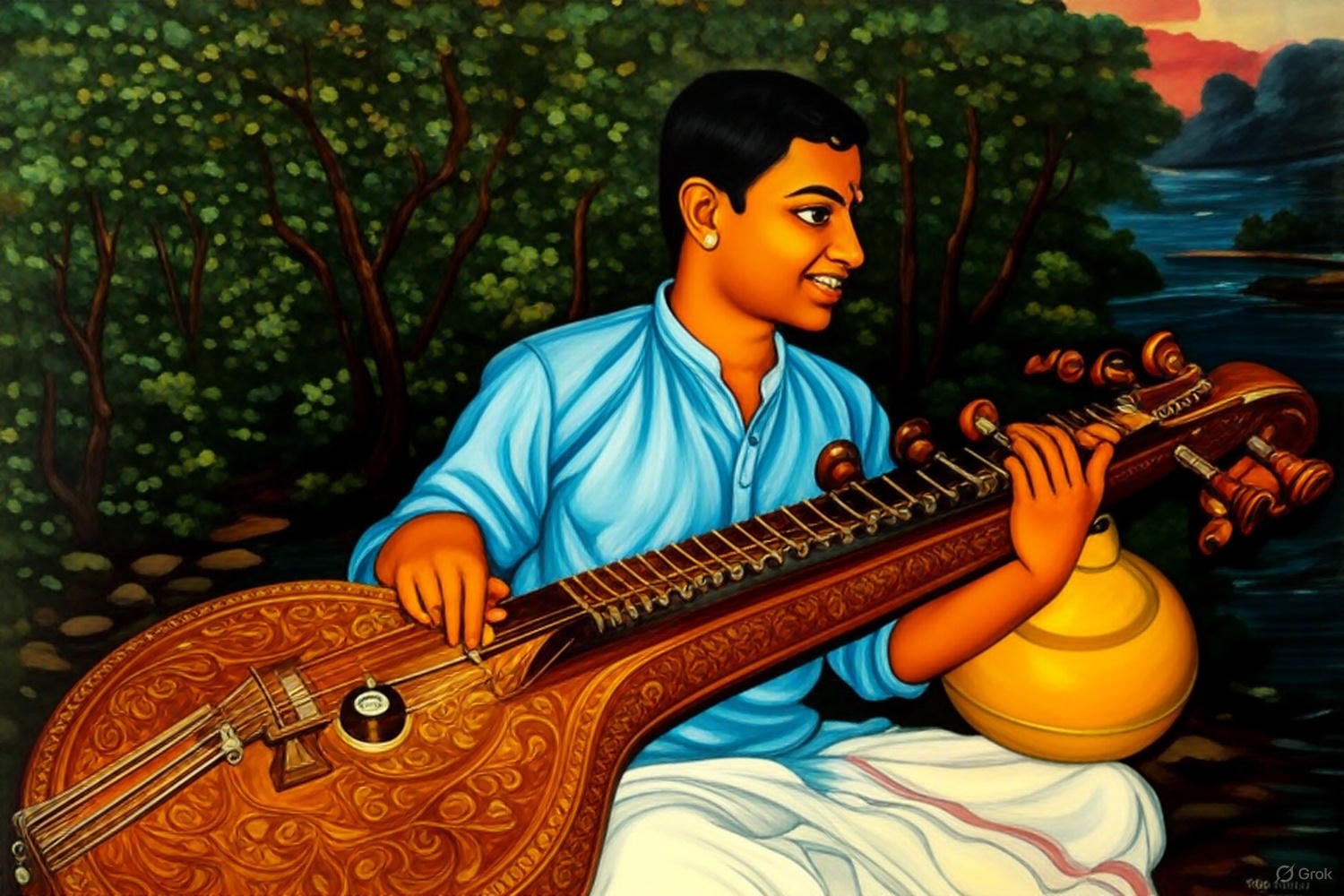
Carnatic music, a classical music tradition from South India, is a captivating art form with a rich history stretching back millennia. Imagine the ancient Vedic chants, the sacred hymns—these formed the seeds of what blossomed into the vibrant Carnatic music we know today. It’s a tradition passed down through generations, often starting with rigorous training under a guru from a young age, a deeply personal and immersive experience.
But Carnatic music isn’t just about ancient roots; it’s a living, breathing art form. Think of it as a musical tapestry woven from several key elements:
Ragas: These are melodic frameworks, each with a unique character and emotional palette. It’s like having a musical mood ring, where each raga evokes a different feeling, from joyous exuberance to serene tranquillity.
Swaras: These are the notes, similar to the Western musical scale, but with subtle nuances and embellishments that give Carnatic music its distinctive flavour.
Gamakas: These are the expressive flourishes, the subtle bends and slides in the melody that add depth and emotion. Think of them as the musical equivalent of a painter’s brushstrokes.
Tala: This is the rhythmic cycle, the heartbeat of the music, providing a structured framework for improvisation and creativity.
Tanpura: This drone instrument creates a calming and meditative atmosphere, providing a foundation for the melody to unfold.
One of the most fascinating aspects of Carnatic music is its therapeutic potential. Raga Chikitsa, or music therapy, explores how specific ragas can influence our moods and even our physical well-being. It’s a testament to the power of music to heal and uplift.
Let’s take a closer look at one raga: Maya Malava Gowla: Often the first raga taught to aspiring Carnatic musicians, its symmetrical structure makes it an ideal starting point. Sung best in the morning, it evokes a sense of peace, harmony, and perhaps a touch of gentle melancholy. It’s a perfect example of the rich emotional landscape contained within a single raga.
Carnatic music is more than just a musical system; it’s a journey of self-discovery, a vibrant expression of culture, and a testament to the enduring power of human creativity